Accademia Galileiana di Scienze Lettere ed Arti in Padova

The Academy – Historical Facts

Sunday 1 February 2009

For what concerns the origins of the first Italian Academies, upon which the Humanists played a big part with their chase of the Antique, one could discuss whether Padua established an Academy sooner than, say, Florence or not, yet Padua can be proud of having one of the most ancient Academies still active nowadays.

Hundreds of members have been part of this cultural reality since the year of its foundation, in 1599, till today, more than four centuries later – professors from the Studium of Padua, professors from other national and foreign universities, renowned intellectuals who enhanced all the possible fields of the human knowledge. A detailed list of the members will soon be prepared and put in this site, in order to give notice of the importance of this old but alive cultural institution.

In order to understand the utility and the importance of the members within the academic life, it is necessary to illustrate the changes in the various offices through the years – most of the times the names and the offices are a mirror of a specific time, a reflection and a testimony of the flowing of history.

There is no proof of the existence of an Academy in Padua earlier than 1540, when the Accademia degli Infiammati was founded, thus giving a start to the growing of many more. As fore-said, this Academy was founded on the 25th of November 1599 by Federico Cornaro in his house located on the Riviera destra S.Sofia (now Via Morgagni), together with other 25 renowned men, among which Galileo G.

JPG - 4.8 kb
Giornale A

The founding papers

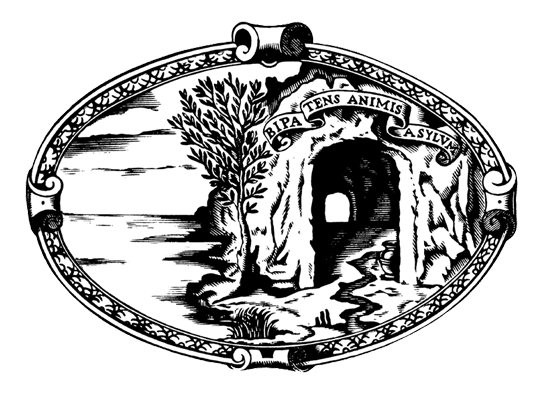
Soon after the set up of the rules that were to govern the life of the Academy, the members were first involved in the choice of a symbol and of a name for the new institution – the Homeric cavern was chosen, shaded by the olive tree, under the motto “bipatens animis asylum”, quoted from a verse by Boezio. As for the name, the members opted for “I Ricovrati”, which means The Sheltered. Every member, then, had to present their own symbol and their own academic name. Galileo Galilei was entrusted the preparation of the shields that were to become the symbols of the members. We do not have, nowadays, material proof of these shields, yet several descriptions of the shields are available in many documents of the time (N. Crasso, L. Pignoria, R. Degli Obizzi, etc.). Beni notes that “the shields of the noble Venetians, of the patrons and the cardinals were placed in the meeting room, as a sign of distinction”.

GIF - 21.4 kb
Impresa accademica

The Accademia dei Ricovrati: insigna

The Academy opened officially on the 9th of January 1600, with the first literary dissertations to be discussed. These dissertations were pronounced by the members in front of a distinguished audience, and then they were reported in a book, which unfortunately got lost. Yet, by reading the annals, we can assume that these essays concerned many fields of analysis, both literary and scientific. Nonetheless, as often happens in the life on these institutions, the Academy went through several moments of silence during its first century of activity. The founder of the Academy, Federico Cornaro, soon moved to Rome, and as the Academy lacked a solid administrative act, the meetings decreased and its activity stopped in 1609. A few months later Federico Cornaro tried to innovate the institution by accepting the Zitocleian Academicians as members of the Accademia dei Ricovrati, and this resulted in the preparation of five more meetings. Another try was performed in 1633, but after one year and a half of hectic activity the Academy closed its doors once again. The doors were re-opened in 1638, but just for a couple of months, until in 1645 Giorgio Cornaro, bishop of Padua, decided to establish a new set of Academic rules concerning the literary and scientific activity, rules that were published in 1647. Particolare del traghetto costruito dai Carraresi e che muoveva dalla Reggia

Again, the Academy remained silent for six long years starting from 1654, while in 1660 another try to give life to the institution failed after a few months. Only in 1668, thanks to the will of the captain of Padua Vettor Contarini, who obtained from the Venetian Senate the Royal Protection and a fixed seat, together with a monetary contribution (law 30-3-1669), the Academy came back to full life, starting a hectic period of activity which was to last several years. This was also due to the interest of some noble protectors (podestà and captains of the city, and the doge Silvestro Valier), who revised the old rules and re-published them in 1697. The Presidency of the Academy was formed by a Prince (a president), two counsellors (of which from 1697 one had to be the former president and had to perform as the treasurer of the institution), a Mayor or Opponent (whose role from 1599 to 1731 was to express a negative opinion on every subject, so that every decision could be well pondered), two Censors (they later became four, two for each class), and a Secretary. Because of the massive amount of work that the secretary had to do, since the first years he was helped by a Vice-secretary, yet this office was not considered very dignified, thus in 1647 the members of the Academy opted for the name of Registrar.

There was no specific difference among the members (the Ricovrati), and during their meetings they used to sit without paying attention to their rank and class. With the Reform Act of 1730, strongly wanted by the Venetian Senate, the Academicians were asked to class themselves as either Meritorious, or Added, or Regular. We can anyway read in the annals that this classification was not strongly followed. One of the members was asked to hold a lecture during the academic meetings, while other two commented on the subject treated. Then all the other members were asked to read some personal compositions, while a few musicians gave pleasure to the audience by performing some arias. Starting from 1735, literary subjects were introduced as a matter of discussion, and in 1750 the Academic council decided that the meetings had to be, alternatively, one about scientific subjects, and one about literary topics. Also in 1750, all the members of the Accademia degli Orditi, another Academy in Padua, were englobed in the Ricovrati, thus making the Academy bigger. Yet, after a while, the academic excitement diminished, partly because the Venetian Republic did not approve some new rules, and the public and private meetings soon stopped.

The Venetian Republic, meanwhile, approved the establishment of an Agricultural Academy in the main cities of the area. Thus in 1769 the Agricultural Academy was founded in Padua, following an act of rules worded by Pietro Arduino, who became the first president of the new institution. The new “Georgic Society” (so they called it sometimes) obtained a financial yearly contribution from the Venetian Senate, added to eight fields inside the city (the ‘Orto Agrario’), and the Sala dei Giganti for their meetings. The institution adopted an administrative body similar to that of the Ricovrati, with a President, a Vice-President, two Counsellors, two Censors, and later a Secretary and a Registrar.

A decree of the 18th of march 1779 by the Venetian Senate melted the Accademia dei Ricovrati and the Agricultural Academy into the Academy of Arts and Science in Padova. The new institution, governed by eminent scholars of the University, was created in order to establish a link between the University and the world of academic research, following the example of many other academies in Europe, as an innovative means of knowledge. A new classification of the members was necessary – the foreign members, and those who lived out of Padua, were called “honorary”; 24 members were called “pensioners”, chosen by the University scholars; 36 were “associates”, of which 12 were from Padua, 16 from the Venetian State and 8 from abroad; 24 were “alumni”, each chosen by a pensioner. The Alumni could choose some correspondent members, which most of the times were some pensioners and associates who had to move from Padua. Surplus members were the former members of the “Ricovrati” and the “Agrari”, who could not be included in the four new classes. The presidency was composed of a President, a Vice-president, who was the former President or a member of the former presidency, four Class Directors, two perpetual Secretaries, one for the Arts and one for the Sciences, and a Treasurer.

For about twenty years the life of the Academy went on smoothly, and the fame of the new institution increased also among foreign countries because of its illustrious members, who were given important tasks, as the building of streets, bridges, research in hydromechanics and in every field of the Arts.

Yet in 1797 the Venetian Republic underwent a violent end, and the activity of the Academy slowed down because of the political changing of the administration, of the exile suffered by some of the members, of the death of some others without the possibility of substituting them with equally valid scholars, and most of all because the financial yearly contribution from the Venetian Senate stopped. Nonetheless, even if the Institution could not work at its full regime, the members carried of writing and publishing extracts in order to increase the prestige of the State, and this without earning a single penny from it. It was 1807 when the Italian Government decided to establish a contribution of £ 6000 in order to pay at least the pensioner members, and to put up some academic prizes and the publication of the worthiest extracts. After this single contribution the Academy was obliged to count only on its strength, and to publish their Acts and Extracts using the inheritance of two of its members, Carlo Bettoni and Alberto Fortis, the rent of a small house, and some small capitals.

With a decree of the 25th December 1810, Napoleon gave orders that every Academy must change its name to Athenaeum, under authority of the Royal Institute, with seat in Milan, but with a branch also in Padua. In 1811, following such a decree, the Athenaeum of Padua presented to the Royal Institute a new set of rules, similar to that established in 1779, but with some changings due to the present political situation. These new rules suggested that the Pensioner Members were to be called Active Members and divided in three classes: 18 for the Experimental philosophy, 9 for the Sciences and 9 for the Arts. There was no restriction instead to the number of National, Foreign and Correspondent members, while the Alumni had to be 24 in number, and were to be chosen among the most promising young scholars in their respective fields. They could become part of the Active members if they lived in Padua, while if they moved away or abroad they could have become Correspondent members. The Active members who decided to move in another city were to be nominated Emeritus members. The Presidency was composed by a President, a Vice-President, a Director for each class, i.e. three, a Secretary, a Treasurer and an Archivist-Librarian. As the Austrians came back to Padua in November 1813 the Academy carried on for a while with the denomination of Athenaeum. On the 21st December 1815 the Academians begged Franz I, emperor of Austria, to accept the dedication on the first volume of the “New Essays” of the Academy, and asked permission to denominate the academy as “Franciscan”. The set of rules established in 1816 was similar to that presented to the Royal Institute in 1811, save for the fact that the National members had to be elected before the others, that the Alumni might have been confirmed every three years, that the Correspondents had to read at least one of their papers during an Academic meeting. Two were the Secretaries, and perpetual, as the Treasurer and the Archivist-Librarian. With the reform act of 1826, the Active members were divided into four classes: 9 for the Physical Sciences, 9 for the Medical Sciences, 9 for the Mathematics and 9 for the Arts. Their nominee was by election. The Honorary members (indeterminate in number), had the same rights of the Active Members, and the National members were distributed among the four classes. The Foreign members could not be more than 24, and the Alumni must have been four for each class. These members, when worthy of notice, were appointed Correspondents. The Academic Council was formed by a President, a Vice-President, a Director for each class, two Perpetual Secretaries, a Treasurer and an Archivist-Librarian. From this year on, the Presidential Post lasted two years. In the reform act of 1838 the number of the members of the Academy changes, together with their denomination. 28 Ordinary members were spread among the previously mentioned four classes (7 members each), the Honorary members had the same rights of the Ordinary members although they lived out of Padua, and the Extra-Ordinary members might have been chosen among the Ordinary and the Honorary. There were no limits to the number of Correspondent members, while the Alumni were reduced to 12, who were to be divided in equal number among the four classes. With the new reform act of 1857 the Emeritus members were inscribed in the same classes as the Ordinary members and, starting from this year, the Academy changed its act every July. The Provincial delegation accused the Academy of having indebtedly used the denomination “Imperial Royal”, as there were only two institution who had been given such a denomination, one in Venice and one in Milan. The Presidency argued that such a definition had always been marked in the denomination of the Academy, and it was the Government’s decision whether to cancel it, or to leave it where it stood during the last three centuries. Yet, in the following year, the Venetian Region was annexed to Italy, and the whole matter disappeared. The Institution was then simply called Academy of Arts and Science in Padua. In order to contextualise the newly organised institution, the members seeked for an approval from the Minister of Culture, which came in November 1867, counselled by the Italian Kingdom. The number of the Ordinary members remained the same, but the four classes were abolished. These members, once they could not serve the institution as they wanted because they moved in another town, were inserted among the Surplus Members, losing their right to vote. The Ordinary members who served the Academy for more than thirty years were given the honorary title of Emeritus members, preserving all their rights as Ordinary members. The Presidency or Academic Council was composed of a President, a Vice-President, four Directors for the now abolished classes, two Secretaries, a Treasurer and an Archivist-Librarian. Two check clerks helped the council during their financial meetings. Other chairs were established out of the Academic council: a Honorary Notary and a Honorary Lawyer in 1874, a Honorary Engineer in 1876. From 1779 till 1866 the Galileiana Academy was the only scientific institution in Padua still existent and active, where the doors were always open for every sort of scholars willing to let the people know the results of their research. Many members of the Academy were then accepted in other institutions created in Padua and in Italy, and this led to a renovation of the reform act, as the legal number of members in other to vote was often hard to obtain. Yet, in 1884, the Academy went through a radical reformation of its acts, which can be considered the prototype of the present charter. The ordinary members were then called Effective members, and could not be more than 30, divided into two classes – a physical, medical and mathematical class, and a class of moral sciences, literature and arts. They made up the Academic council and were asked to present an original paper, called “Academic thought”, every two years. The Effective members, after twenty year of activity and at least ten “thoughts”, could be inserted among the Emeritus members, preserving all their rights. The Academic council could even elect an Emeritus member because of his age and his Academic importance. An indefinite number of Honorary members was composed by former Effective members who had to move away from Padua, or who could not present a new “thought” every two years. The Correspondent members were those academicians who read their works in the Academic meetings, yet without having to write a new “thought” every two years. This category was made up of 40 Residents, people who lived in Padua, and an indefinite number of Non-Residents. The classes of the Surplus, Extra-Ordinary members, and the Alumni were abolished, but the members elected in these classes before this new reform act still kept their title. The President and the Vice-President, chosen in turn out of the two classes, started their activity at the beginning of the Academic year, and they kept their seats for two years. Then, the Vice-President was to become the President. The two Secretaries and the Treasurer held the office for three years, and could be re-elected. As the bibliographic material was conserved by one of the public libraries in Padua, the office of the Librarian was abolished. In 1883 the publication of the “New Essays” stopped, and in 1884 stopped the publication of the “Periodical Review”. Both these issues were substituted by the “Acts and Memories of the Royal Academy of Arts and Science in Padua”, which contained, together with the “thoughts” read during the year, also the administrative acts discussed in the meetings. With the new reform Act, the authors had to bear the responsibility of all they decided to write, thus making the role of the Censor redundant, role which was to be abolished soon after. This role had importance especially among the Ricovrati, when in 1602 Galileo held this office. Other modifications to the reform act were to be brought: from 1909 the members were dispensed from producing a new “Academic thought” every two years, and the Presidency changed its name to Presidential Office. From 1917 on, a Royal Decree sealed the new elections. After the First World War the Academy, considered as a major cultural institution by the most important national scientific institutes, with several financial aids from the government and the local administration, started an intense scientific activity, till the breaking of the Second World War, even if in 1936 several restrictions were imposed by the fascist regime. Cultural competitions were organised (concerning the creation of a guide of Padua, the publication of the works by Ruzante, the solving of the water problems in the surrounding areas of Padua, etc.), special meetings were proclaimed to celebrate interesting facts and people of Padua, and authors like Carducci, D’annunzio, Zanella were commemorated. In 1933 the Academy proposed to the Government a few changings in its acts, but the fascist government had already prepared a reformation that was to “coordinate the activity of the cultural institutions and improve their organisation”. In truth, this was to limit the freedom of speech, in order to preserve the regime. A national law of September 21st 1933 imposed to all the members the signing of a document of loyalty to the Nation, the King and the regime. Every oath of allegiance was signed on official paper by the members, the President, a Secretary and two witnesses. Of all the members, the only one who refused to sign was Prof. Giulio Alessio (a former minister in the last democratic government) who, because of this denial, was rejected from the Academy with a letter from the Minister of Culture, with letter sent on December 13th 1934. The President of the Academy stated that all the members were against this action, yet all the members signed, and so they had no say in the decision. Subsequently, a new reform act was imposed on the Academy, approved by a Royal Decree on October 11th 1934, but a hard correspondence between the Academy and the Minister lead to some important changes, given the fact that the Accademia Trentino Istrana had been absorbed into the Accademia on March 26th 1936. The new reform act corrected the foundation date of the Academy, shifted from 1559 to 1599, the number of Effective members was raised to 36. The Effective members who, because of their age or their health, could not have an active role in the academic life, were moved among the Emeritus members, while the members who moved from Padua were moved among the Surplus members. The number of the Correspondent members was indeterminate, but the foreign correspondents had to be half of the national correspondents. The class of the Honorary members was abolished, only the King, Vittorio Emanuele III, was awarded the title of Honorary President. The President, the Vice-President and the Effective members had their nominee by a Royal decree, attesting their belonging to one class or another. The other members were nominated by the Minister of Culture. The President and the Vice-President had to swear loyalty in front of the Prefect, while the members in front of the President. The academic year ran from October 28th to October 27th, and the voting was not secret anymore, but by raising the hand. The extracts were to be published in two volumes, one for the moral disciplines, one for scientific disciplines, which had to bear the heading “Continuation of the acts of the Academy Veneto-Trentino-Istrana”. As the political and international situation of Italy got worse and worse, a Royal Decree of September 5th 1938 imposed to expel all the Jewish members from all the academic institutions. Because of this loathsome decision, the Academy lost an Emeritus member, four Effective and eight Correspondent members. Although the remaining members were clearly against this act, they never openly contrasted it. The war started soon after, leading the Academy to one of its most obscure periods. There was no money for the everyday expenses, the extracts could not be published for want of paper, and the exchanges with other international institution ceased because of the political situation. Thus the publication of the Academic Acts officially ceased in 1943, partly because the numerous air bombings made impossible the Academic meetings. The bombings of February 8th 1944 and January 4th 1945 seriously damaged the seat of the Academy. At the end of the war the Academy was in a state of extreme poverty. There was no money, no food, many books went lost. A member (the President A. Ferrabino) stated: “we just have our honour”. The only institution that accepted to help the academy was the University of Padua, which considered the Academy as a small sister, and felt the obligation of looking after “her”, by granting its best rooms for the academic meetings. Before attempting to repair the seat and to resume the publication of the Acts, the Academy had to sign a new Reform Act by electing a new President and a new Academic body, as many worthy members lost their lives during the war. On March 1st 1946, the expelled members were re-admitted in the Academy, preserving their rights as they had never left their office, while the members who showed an excessive fascist behaviour were expelled. Some of them were re-admitted a few years later, as they were not legally prosecuted. On the meeting of March 6th 1949, the academic council proposed to change the name of the institution to Accademia Patavina di Lettere Scienze ed Arti, and the new reform act was signed by the President of the Italian Republic in that same year in October. The number of the Correspondent members was fixed to 70, while the foreign Correspondents had to be 20. The President and the Vice-President lasted two years, with the possibility of being re-elected once. The role of the Librarian re-appeared and, as in the past, was part of the Presidential Office. The activities started with a new vigour and the exchanges with foreign institution were resumed. A few important congresses were organised, mostly together with the University, on several topics, literary and scientific. Worth of notice are the celebrations held to commemorate Benjamin Franklin, Goldoni, Albertino Mussato, all past members of the Academy. In 1959 was publicised a architectural competition to renew Padua, in memory of Bruno Brunelli Bonetti. Some rooms were purchased under the academic rooms, but all the seat needed a thorough renovation, which lasted for five years. The frescoes were brought to life again, together with all the books who got dispersed in several libraries during the war. After the renovation the seat could become open to the public, in order to strengthen the bond with the city.

Recently, as the number of men of culture in the world has widened, the Academic council decided to enlarge the number of the members, by having 50 Effective members and by considering as Surplus members those who lived outside the Venetian area. With a decree of May 5th 1997, the Academy decided to change its name to Accademia Galileiana di Scienze Lettere ed Arti in Padova, thus honouring the most illustrious co-founder of the institution. Nowadays the Academic body is thus composed: a maximum of 80 Effective members, a maximum of 100 national and 20 international Correspondent members, an indefinite number of Emeritus and Surplus members. The members are equally divided in two classes – one for mathematics and physical and natural sciences, one for moral sciences, letters and arts. The Academic council is made up by all the Effective members. The Presidential office includes the President, the Vice-President, two Secretaries (one for each class), a Librarian and an Administrator.


Home page Contact | Site Map | Private area | Statistics | visits: 73419

Follow-up of the site's activity en  Follow-up of the site's activity Index   ?

Site created with SPIP 1.9.2e + ALTERNATIVES